Înapoi la știri
SYSTEM MAKEOVER: A disciplined Defense (Gainey) paired with a high-octane offense (Goins). How will it work? - Pack Insider
1 oră în urmă
16 minute min
Elena Dumitrescu
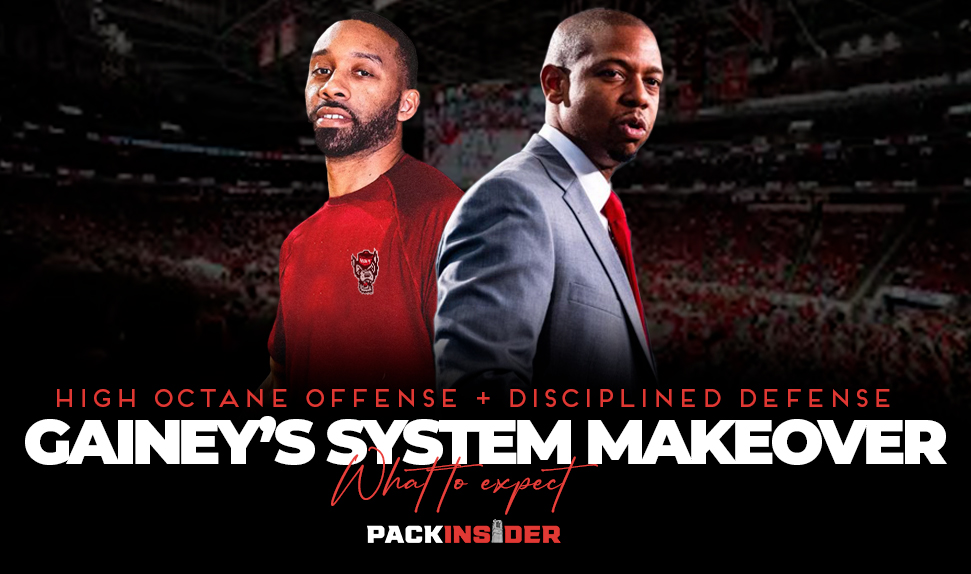
NC State’s hire of Justin Gainey was met with a lot of excitement from the Wolfpack faithful, but as a first-year coach, there are obviously some questions. The biggst being about what type of system he’ll be bringing as a first year head coach. Justin Gainey is the head coach at NC State, and he’s just spent the past 6 years under Rick Barnes as the associate head coach and the defensive coordinator. So I think we can assume that Gainey will prioritize defense. Tennessee had the 12th-best defense in the country (AdjD), and you usually don’t fix what isn’t broken. Because of that, I believe Gainey runs a system with very similar principles. If you want to know what that looks like, here is Gainey himself breaking down his entire defensive strategy. The next piece we want to focus on is the hiring of Anthonoy Goins, who will be coming over from Georgia as an assistant coach. He is best known for his offensive prowess and led the Bulldogs to have the 21st most efficient offense in the country and scored the 5th most points of any team, while setting school records in points, 100-point games, FGs made and 3s attempted. Those numbers scream volume and pace. Goins is going to play fast. We also know Patrick Stacy will be retained, potentially in a GM or advanced analytics role of some sort. He is very involved, so we can be assured that anything NC State does is built on a foundation of analytics. So when you put those things together, what type of system will we be looking at? Here’s our best guess so far… Gainey spent the last five seasons as associate head coach and defensive coordinator under Rick Barnes at Tennessee. He brings a proven blueprint for elite defense. The 2025-26 Volunteers finished with an adjusted defensive efficiency of 94.4, which ranked 14th nationally. That defense emphasized physicality, length, and contesting shots without relying heavily on gambling for turnovers. Tennessee forced opponents into low-efficiency looks in the half-court while remaining disciplined enough to rebound and limit second-chance opportunities. Expect that same mindset to define the Wolfpack. Gainey has already signaled that toughness and defensive identity will be non-negotiable. With the head coach coming directly from a program known for its defensive culture, NC State should field a versatile, hard-nosed group capable of clamping down for long stretches. What’s that look like? Well, it looks a lot different than the defense you’ve seen under Kevin Keatts or Will Wade. Less gambling in the passing lanes, less switching, less wild close-outs on shooters, and less trying to play up and getting steals/deflections. I think this will be a defense that relies less on quickness and interchangeability and more on physicality and positioning. Something with pack-line principles, meaning they aren’t going to let you get to the rim, and they are going to stay in front, and keep a hand in your face. If you can hit contested shots. What does that mean personell-wise? It means they are going to need guys willing to take pride in stopping people and guys with a higher on-court IQ level, able to understand spacing and positioning on the defensive end. They will likely prioritize more well-built, physical players with size and length who can make up for foot speed with an understanding of positioning. He’ll look for guys who understand the mental side of defense. Guys who know how to control/guide a ball handler, make them go where they want them, instead of what we’ve seen for years, with guys simply reacting and trying to stay in front. On the offensive side, Goins arrives from Georgia. The Bulldogs played at a blistering pace under his influence. Georgia’s adjusted tempo sat at 71.7 possessions per game, which ranked 12th nationally. Their average possession length was just 15.3 seconds, one of the quickest in the country. The offense was efficient inside, shooting 57.0 percent on two-pointers, and protected the ball exceptionally well with a turnover rate of 14.3 percent. It was not a reckless up-and-down style. Instead, it was a quick-strike attack that pushed in transition when opportunities arose and attacked efficiently in the half-court. That Georgia offense also showed low non-steal turnover rates and a willingness to drive and create rather than rely on heavy ball movement or extreme three-point volume. Goins’ units scored at a high level while keeping mistakes to a minimum. So, what type of guy do you need to run this? Well, you need a creator at the point and shooters around the arc. Look for NC State to get a paint touch PG who can get into the lane and create havoc. Someone who can keep the defense honest by scoring from in there, but also will kick it out to shooters around the perimeter. You don’t need to have super-speed, Uber-athletes to run this. You just shot makers are can score with a little pressure on them. This is where the roster build gets tricky. If you want to play fast, you can’t be super picky about your looks. You can’t hunt for the perfect shot on every possession. If Goins brings what he had going at UGA over to NC State, this will be an offense that won’t be too far removed from what we saw last year, except I think you’ll a PG who is a little bit more of a leader and a little more disciplined than Copeland was. I also think you’ll see a PG with way less usage than Copeland gave you. I do assume you’ll see a lot of pick-and-rolls, but you’ll also see more ball movement. I think stylistically it’ll remind you of the offense Will Wade pitched to us prior to the season (PNRs, high volume 3s, high scoring, high efficiency), but with more size, more rim pressure, and a 4-man who is much more versatile and efficient than Williams ended up being. The synergy between the two sides could be potent. Tennessee’s style under Barnes and Gainey was already adept at generating defensive rebounds and forcing bad shots. Those stops become immediate fuel for a Goins-led fast break. Easy transition baskets would inflate the pace further and allow NC State to play with both efficiency and speed. This approach turns defense directly into offense in a way that wears opponents down over 40 minutes. This combination is not as rare as it once seemed. Several elite defensive programs in recent seasons have paired shutdown half-court play with legitimate tempo. Teams such as Michigan and Arizona have shown it is possible to rank inside the top 20 defensively while operating at a top-50 pace (Florida and St. John’s were also in this category). They use length and athleticism to create live-ball chances that feed an aggressive offense. For NC State, the projected system looks like a 2026 update on the defense-creates-offense mantra, only with the pedal pushed harder on the offensive end. The Wolfpack should be physical and disruptive on defense, forcing tough shots and securing rebounds. On offense, fans can anticipate quicker possessions, more transition opportunities, strong interior scoring, and enough perimeter threat to keep defenses honest. It will not be chaotic. The low-turnover tendencies from Georgia suggest controlled tempo rather than reckless running. This stylistic marriage carries real upside in the ACC. In the 2025-26 season, the ACC featured several of the slowest teams in the country according to KenPom adjusted tempo rankings. Duke played at 65.4 possessions per game, which ranked 286th nationally. Clemson was even slower at 64.1 possessions, ranking 339th. Pittsburgh sat at 63.6 possessions for a 344th ranking, while Virginia operated at 65.9 possessions to rank 267th. NC State’s own 2025-26 team finished at 69.1 possessions, which placed 85th nationally and already felt relatively quick compared with many conference opponents. A Goins-influenced offense that approaches Georgia’s 71.7 adjusted tempo would stand out. Many ACC teams lean toward slower, grind-it-out defensive battles or deliberate half-court styles. A program that can lock down defensively while playing at one of the faster paces in the conference could create consistent matchup problems by forcing opponents into uncomfortable up-and-down games. Look, we all have a level of excitement here with Gainey being a former player, but as we saw with Sidney Lowe, that doesn’t buy you much once the ref throws the ball up. The real key for Gainey will be implementing a system that the fanbase enjoys while (most importantly) winning games. Bringing in Goins as offensive coordinator gives the staff immediate expertise in building a high-output offensive attack. That should be welcomed. On paper, the philosophical fit is there: an elite defensive coordinator now running the show, paired with an assistant who knows how to make an offense fly without sacrificing efficiency. NC State appears poised to blend the best of Tennessee’s physical identity with Georgia’s accelerator. This could create one of the more intriguing stylistic experiments in the conference next season. Roster construction through the transfer portal and recruiting will determine how quickly this vision takes shape, but the foundation is pretty promising. TUESDAY PORTAL UPDATE: Let the chaos begin! Here is who we’re keeping an eye on… NC State’s Colt Langdon Officially Enters the Transfer Portal NC State Guard Jayme Kontuniemi Officially Enters the Transfer Portal WEDNESDAY PORTAL UPDATE: McNeil enters, NC State has a great Zoom call, Juke becoming a long shot NC State Guard Paul McNeil Jr. Will Enter the Transfer Portal NC State to hire Georgia assistant Anthony Goins as offensive coordinator. Georgia ranked 5th nationally in scoring offense. NC State in contact with G Kahmare Holmes of Wofford, who averaged almost 20 ppg last year NC State expected to retain assistant GM and analytics expert Patrick Stacy